
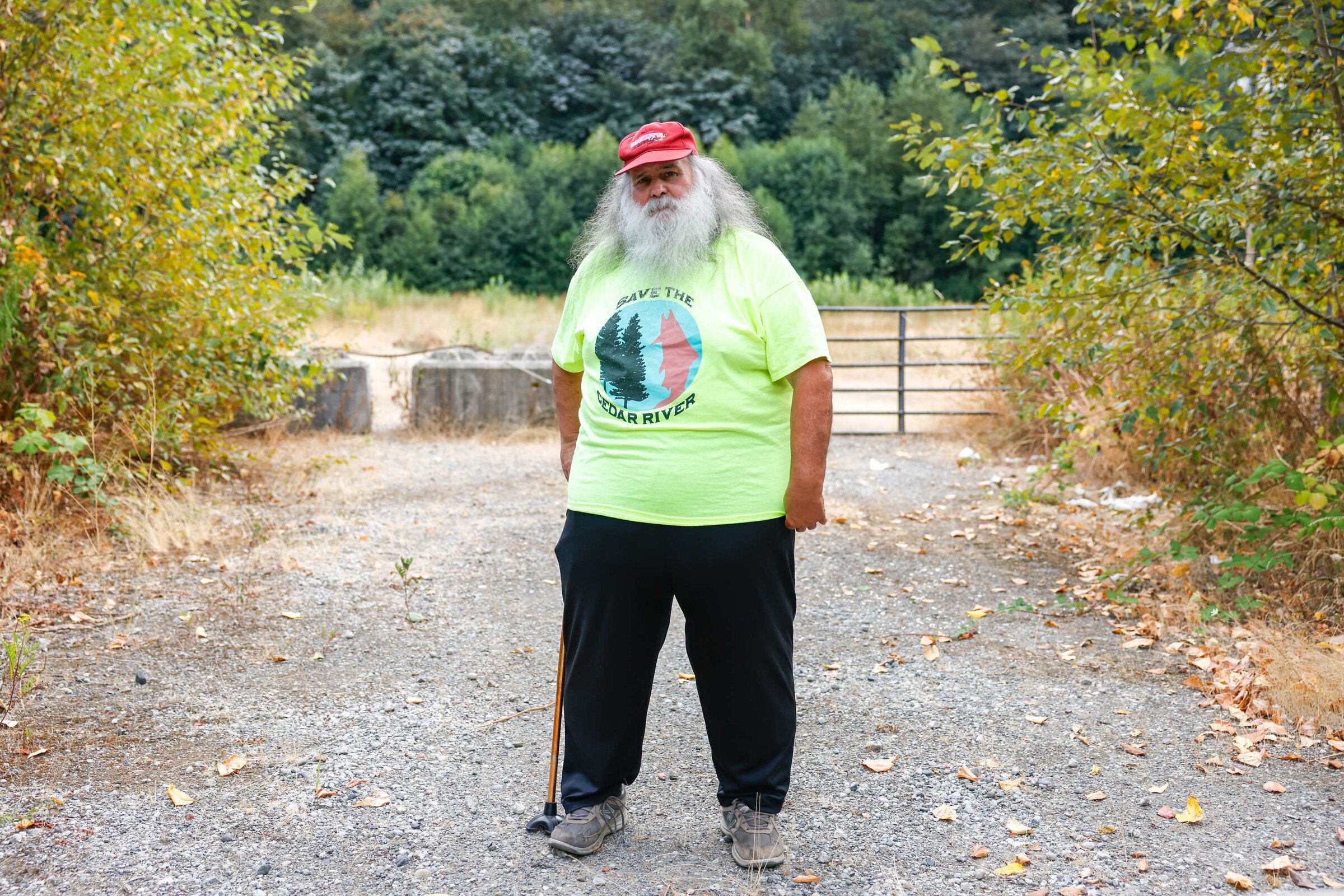
Nine years ago, one of Bob Baker’s neighbors noticed a little sign posted on a vacant lot near their homes, between Renton and Maple Valley.
It was a notice that someone was going to build an asphalt plant on the site, a grassy lot speckled with wildflowers and weeds and right across a highway from the Cedar River.
That little sign led Baker to nearly a decade of activism — organizing, fundraising, “meetings, meetings and meetings” — in an effort to stop the asphalt plant that he and others said would bring noise, noxious leaks, traffic and pollution to their sleepy rural neighborhood.
Along the way, Baker and his group Save the Cedar River protested, they challenged the asphalt company’s permit, they sued, they appealed. At every step of the legal process, they lost.
And then, suddenly, improbably, they won.
King County last month bought the property from Lakeside Industries, the company that had sought to build the asphalt plant. Instead, county leaders want to build a park.
“We couldn’t out-dollar them but we just kept throwing appeals and just whatever we could to delay and they finally just said ‘we’re done,’ ” Baker said. “It is extremely hard to be a successful activist but I also learned that a small group of people with the right mindset and the right dedication can sometimes overcome that.”
The county paid $14 million for the 25-acre property. Lakeside had bought it for $9.5 million in 2016. The county assessor has appraised the land at $6.4 million, but Metropolitan King County Councilmember Reagan Dunn, who led the effort to buy the property, said a third party appraiser put the value at $16.7 million.
Funding came from several sources. The County Council authorized $6 million for the purchase in June as part of much larger budget legislation. Additional money came from the King County Flood Control District and the county’s Conservation Futures tax, County Executive Girmay Zahilay’s office said.
“It’s a success story for the community coming together, opposing a project,” Dunn said. “They did it as professionally, as responsibly as I’ve seen done maybe ever. Sometimes you see these land use fights, they get really nasty, they get really personal, and this stayed productive enough so that ultimately we could cut the deal.”
The odyssey began in 2008, when a little-noticed zoning change was slipped into a giant piece of county legislation. The change, made as part of the county’s comprehensive plan update, shifted the parcel’s zoning from rural to industrial.
Dunn, who was on the County Council at the time, voted for the change. Now he calls it “probably the vote I took that I regret the most.”
“Sometimes we get it wrong,” he said. “You can still get it right if you work real hard.”
A landscaping company bought the site and used it to turn materials into mulch and soil. Lakeside, which has 15 asphalt plants across Washington and Oregon, bought the site in 2016. Soon after, Baker, retired after a career selling construction equipment, and his neighbors began protesting.
They found an ally in Dunn, whose district includes the area. He persuaded the council to pass a moratorium to delay construction. The permit and legal process grinded on.
Then, one day last year, Baker said he got a phone call from Lakeside Industries. They set up a meeting, with lawyers, in Dunn’s office.
“They said ‘we’re done, this just took too much time,’ ” Baker recalled. Lakeside asked if Baker and Dunn would oppose the company’s building a warehouse instead of the asphalt factory. All agreed that would be a reasonable compromise.
Baker said Mike Lee, Lakeside’s president, was “wonderful to talk to.” As the meeting was ending, Baker asked Lee if he’d be willing to sell the property. Lee, he recalled, said definitely.
“Reagan and I both looked at each other, we discussed how much it would cost,” Baker said. “We said we gotta figure this out somehow, we gotta buy this.”
Lakeside did not return requests for comment last week.
Funding now secured, Dunn and Zahilay’s office both said they plan to seek community input about what should happen next on the site.
A park, but what kind? Dunn said they plan a parking area, and a crosswalk to get to the river and the bike path across the highway. The wooded part of the property has a trail on it, Dunn said, that could potentially be connected to the nearby regional trail system. A ballfield? Maybe just some picnic tables?
“We want it to stay an open space,” he said. “How intense the use is going to be is to be determined.”
Baker recalls hours and hours sitting at the kitchen table of one of his co-organizers, poring over thousands of pages of documents looking for the one piece of evidence that might prove persuasive. He traveled to other states to see how they dealt with asphalt plants. He would meet with anyone who would talk with him.
“All those out there that are facing a similar deal,” he said, “just keep fighting the fight.”
David Gutman: 206-464-2926 or dgutman@seattletimes.com