
The Seattle Times article on potential mining in the Green River Gorge area (“If King County needs mines to build, who gets them ‘in their backyard?,’ ” Oct. 4) focused on potential aggregate gravel needs for homes and roads for the next several decades, while glossing over major regional environmental issues for what would become the largest industrial complex ever constructed in rural King County.
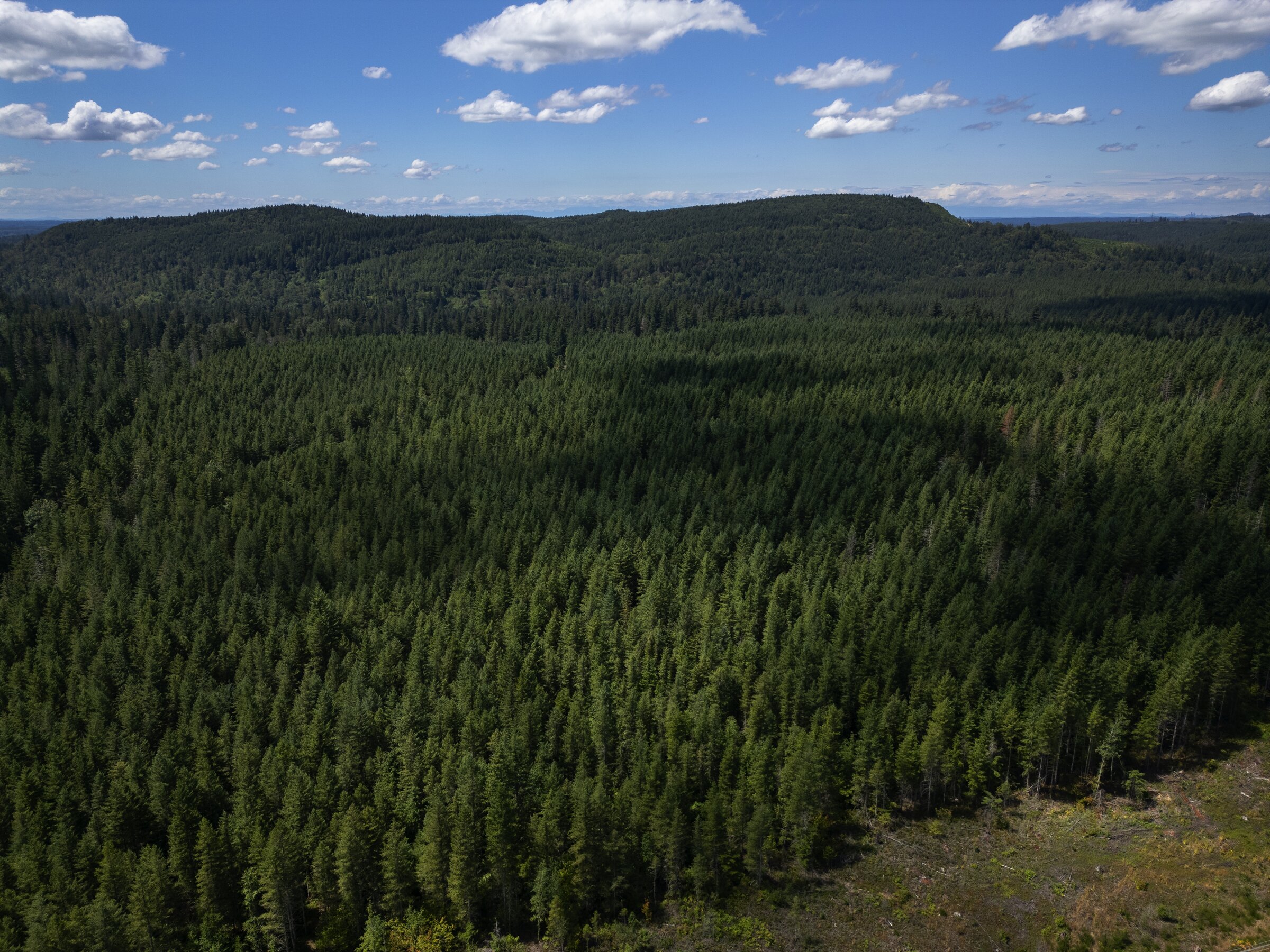
If approved, four large gravel mines, with crushing facilities and an asphalt facility, would sprawl over 990 acres of forested wildlife habitat on the slopes of the Green River Gorge, one of King County’s most fragile and high-value natural resources and which contains the last accessible wild Chinook habitat on the Green River. The article provides little depth regarding how the proposed mine would impact the Green River’s unique fish and wildlife migration corridors; surface and groundwater; and culturally important areas for tribes.
King County, by law, regularly assesses mining needs and potential extraction sites and categorizes and maps them as part of state-required Comprehensive Plan updates. The proposed site, near Cumberland, is not shown as one of those potential mining sites, nor is it even zoned for mining — it is zoned for forestry. Further, there are a large number of existing gravel sources that appear fully capable of meeting future market needs.
The proposal would cause enormous impacts to the Green River watershed. Two hundred and fifty thousand gallons a day of water for operations are proposed to be taken out of the already-stressed and heavily subscribed Tacoma Water System’s Howard Hanson Dam and Reservoir. A good portion of South King County will see hundreds of large gravel trucks a day on narrow rural roads and several weight-limited bridges.
On June 26, 1995, a 50-year “Agreement Pertaining to Forest Land Acquisition and Biosolids Application” was consummated, by which King County transferred certain forest lands to the Washington Department of Natural Resources for long-term forest management to “become a permanent part of the state forest system.” The applicant must secure operating access easements through those lands, but the agreement stipulates that the land can only be used for forestry or park/open space purposes, so those easements cannot be granted, nor the property swapped, as the applicant has sought. The public was assured by the agreement that: “no … lands may be transferred for residential or commercial development purposes.”
Moreover, the proposed site’s proximity to the Green River Gorge is inconsistent with the principles of the Green River Gorge Conservation Area, established in 1969 (Revised Code of WA 79A.05.705), a standard for the Washington State Parks and Recreation Commission. The proposal not only threatens to grossly degrade the outstanding benefits of scenery, recreation, fish and wildlife, and other ecosystem benefits, it directly contradicts this adopted long-term plan.
King County recognized many of these problems and recently issued a Determination of Significance calling for a scoping of an environmental-impact statement. The Joint Team that I coordinate provided a 140-page detailed technical and science-based response: st.news/gorge
King County has a legal and moral duty to conduct the best possible EIS per the State Environmental Policy Act. The EIS must include an analysis of the potential destruction of the upland buffer zones, the disruption of the springs that feed the gorge, and the visual/acoustic degradation of state-recognized lands that the public has spent over 50 years and millions of tax dollars trying to protect. Further, it must provide enough detailed analyses so that King County can determine ifit has the legal authority to approve industrial operations and the accompanying environmental degradation that would severely damage the gorge and directly sabotage a 50-year state-mandated conservation effort.
Unfortunately, the article essentially painted a picture of this as a local issue. That could not be further from the truth as over 500 individuals and groups from all over the Puget Sound region have written letters to King County. King County has choices — it can plan responsibly, protect irreplaceable natural resources and ensure industrial operations occur where they belong. Or it can permit a massive industrial complex undermining a treasured regional ecosystem and landscape. The public deserves a full, honest accounting — and a future that protects the Green River Gorge.
Peter Rimbos is a 23-year member of the Greater Maple Valley Unincorporated Area Council and founder and coordinator of a joint team of 11 unincorporated Rural Area Councils, spread throughout King County.